


Introduction
Cartilage injuries are a frequent and often frustrating problem, especially for those who lead active lives or are recovering from joint trauma. Because cartilage has a limited capacity to heal itself, damage can significantly affect movement and quality of life. This reality has sparked ongoing research into effective, minimally invasive ways to repair cartilage. One of the latest advances is ChondroFiller — an injectable, cell-free treatment that aims to support cartilage repair while avoiding the challenges of traditional surgery.
What Is ChondroFiller and How Does It Work?
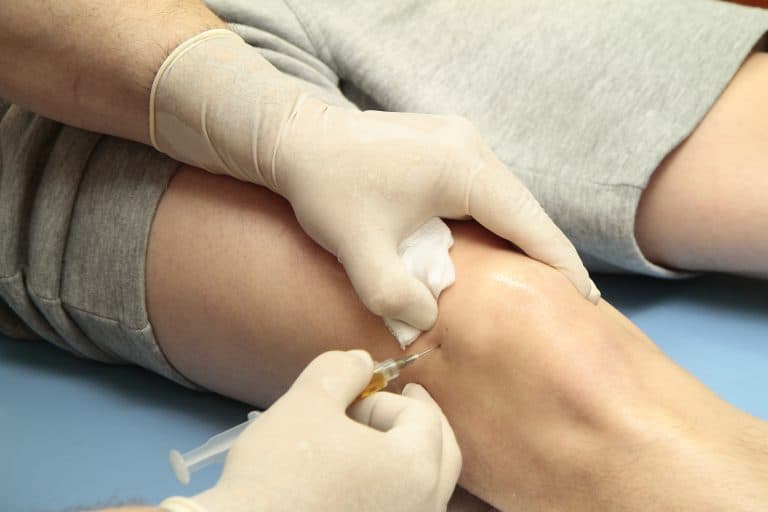
ChondroFiller is a cell-free, collagen-based gel composed mainly of type I collagen. Delivered via injection, often guided by imaging techniques, it is applied directly to the damaged cartilage. Unlike treatments that rely on cell implantation or invasive surgery, ChondroFiller forms a protective scaffold over the injured area. This scaffold encourages the body’s own cartilage cells to move in, multiply and gradually rebuild the tissue. Thanks to its unique composition, ChondroFiller can be applied through minimally invasive procedures, which means fewer risks and shorter recovery times. As demonstrated in a clinical review, “Chondrofiller Liquid is shown to be a safe procedure which was able to provide satisfactory results in these first results” (Breil-Wirth et al., 2016). In addition, mechanical studies have found that “ChondroFillerliquid…constitutes a bi-phasic structure, where the 60% nonfibrillar hydrogel proportion dominates the mechanical response” (Weizel et al., 2020), illustrating how its complex structure supports cartilage repair.
ChondroFiller Compared: Glue or Seeds for Healing?
To better understand how ChondroFiller works, picture it not as “glue” sticking tissues together, but as “seeds” planted in a garden. Rather than simply bonding damaged cartilage, it creates a nurturing environment — a scaffold — that encourages your body’s own cells to grow and repair the injured area over time. This seed-like concept makes the science easier to grasp and explains why ChondroFiller supports natural regeneration. Supporting this, research notes that “both cartilage and ChondroFillerliquid contain fibrillar components, but the latter constitutes a bi-phasic structure” (Weizel et al., 2020). This unique makeup is key to its role as a scaffold supporting tissue growth.
Free non-medical discussion
Not sure what to do next?
Information only · No medical advice or diagnosis.
Key Advantages: Why Is ChondroFiller Considered Minimally Invasive?
One of ChondroFiller’s greatest benefits is its minimally invasive delivery — it’s injected rather than requiring open surgery. This leads to advantages like shorter hospital stays, less discomfort, a lower risk of infection, and quicker recovery. It’s especially suitable for patients with specific cartilage defects looking for alternatives to more invasive procedures. According to clinical follow-up data, “about 80% of the patients indicated good or very good results and would have the operation done again” (Breil-Wirth et al., 2016). Furthermore, a straightforward arthroscopic method has been developed for treating hip cartilage defects, where “ChondroFiller liquid, a liquid cell-free collagen matrix,” is used in a “1-step arthroscopic procedure” (Perez-Carro et al., 2021). This highlights how ChondroFiller enables new, practical and reproducible minimally invasive techniques that improve patient care.

Expert Guidance and Professional Care
Professor Paul Lee, a highly respected cartilage specialist and Regional Surgical Ambassador, as well as advisor to the Royal College of Surgeons of Edinburgh, brings extensive expertise to the field. At the London Cartilage Clinic, where he works, patients benefit from a welcoming, knowledgeable environment committed to innovative, patient-centred orthopaedic care. This depth of experience ensures that those considering treatments like ChondroFiller receive expert advice and support.
Conclusion and Responsible Disclaimer
ChondroFiller represents an exciting, modern approach to cartilage repair — a cell-free, injectable scaffold that harnesses your body’s natural healing powers with minimal invasiveness. For patients with cartilage damage, it offers a valuable treatment option alongside other therapies. However, every case is unique, so it’s essential to consult a qualified healthcare professional for personalised advice and treatment planning. For individual medical advice, please consult a qualified healthcare professional.
References
- Breil-Wirth, A., von Engelhardt, L., Lobner, S., & Jerosch, J. (2016). Retrospective study of cell-free collagen matrix for cartilage repair. Orthopädie und Unfallchirurgie – Mitteilungen und Nachrichten, 0515-0520. https://doi.org/10.3238/oup.2016.0515-0520
- Weizel, A., Distler, T., Schneidereit, D., & Friedrich, O. (2020). Complex mechanical behavior of human articular cartilage and hydrogels for cartilage repair. Acta Biomaterialia, 121, 170–182. https://doi.org/10.1016/j.actbio.2020.10.025
- Perez-Carro, L., Rosi Mendoza Alejo, P., Gutierrez Castanedo, G., Menendez Solana, G., Fernandez Divar, J. A., Galindo Rubin, P., & Alfonso Fernandez, A. (2021). Hip Chondral Defects: Arthroscopic treatment with the needle and curette technique and ChondroFiller. Arthroscopy Techniques, 10(7), e1697–e1702. https://doi.org/10.1016/j.eats.2021.03.011
Frequently Asked Questions
- ChondroFiller’s cell-free, collagen-based gel is injected minimally invasively, avoiding open surgery. This innovative approach encourages your body’s natural cartilage repair, making it an option for those preferring less invasive, advanced therapies offered by experienced professionals like Professor Paul Lee.
- Professor Paul Lee is a world-class cartilage expert, holding advisory roles at the Royal College of Surgeons of Edinburgh. His profound experience ensures patients at London Cartilage Clinic receive thorough, evidence-based guidance and care tailored to their unique needs.
- ChondroFiller is injected directly into the damaged area, often through keyhole surgery, requiring no large incisions. This means less discomfort, reduced infection risk, shorter hospital stays, and a potentially speedier return to mobility compared to traditional surgical options.
- London Cartilage Clinic specialises in innovative, patient-centred care with a welcoming atmosphere. By combining Professor Lee’s expertise and cutting-edge treatments like ChondroFiller, patients benefit from advanced therapies designed to enhance healing and overall joint health.
- Rather than acting simply as a glue, ChondroFiller provides a scaffold—like planting seeds—for cartilage cells to populate and grow. This supports regeneration by nurturing your body’s own repair mechanisms while minimising disruption through a gentle, injection-based approach.
Legal & Medical Disclaimer
This article is written by an independent contributor and reflects their own views and experience, not necessarily those of London Cartilage Clinic. It is provided for general information and education only and does not constitute medical advice, diagnosis, or treatment.
Always seek personalised advice from a qualified healthcare professional before making decisions about your health. London Cartilage Clinic accepts no responsibility for errors, omissions, third-party content, or any loss, damage, or injury arising from reliance on this material.
If you believe this article contains inaccurate or infringing content, please contact us at [email protected].
London Cartilage Clinic
Modern treatments, designed for lasting knee outcomes
Every treatment plan is selected to help you return to the quality of life you deserve. Our team combines up-to-date techniques with consultant-led decision making across cartilage repair, regeneration and replacement.
What your journey can look like
Step 01
Consultant-Led Assessment
Symptoms, imaging and goals reviewed in one structured appointment.
Step 02
Personalised Treatment Plan
A clear route chosen from repair, regeneration or replacement options.
Step 03
Precision Delivery
Modern techniques and specialist equipment matched to your diagnosis.
Step 04
Long-Term Knee Health
Follow-up guidance focused on durable function and quality of life.